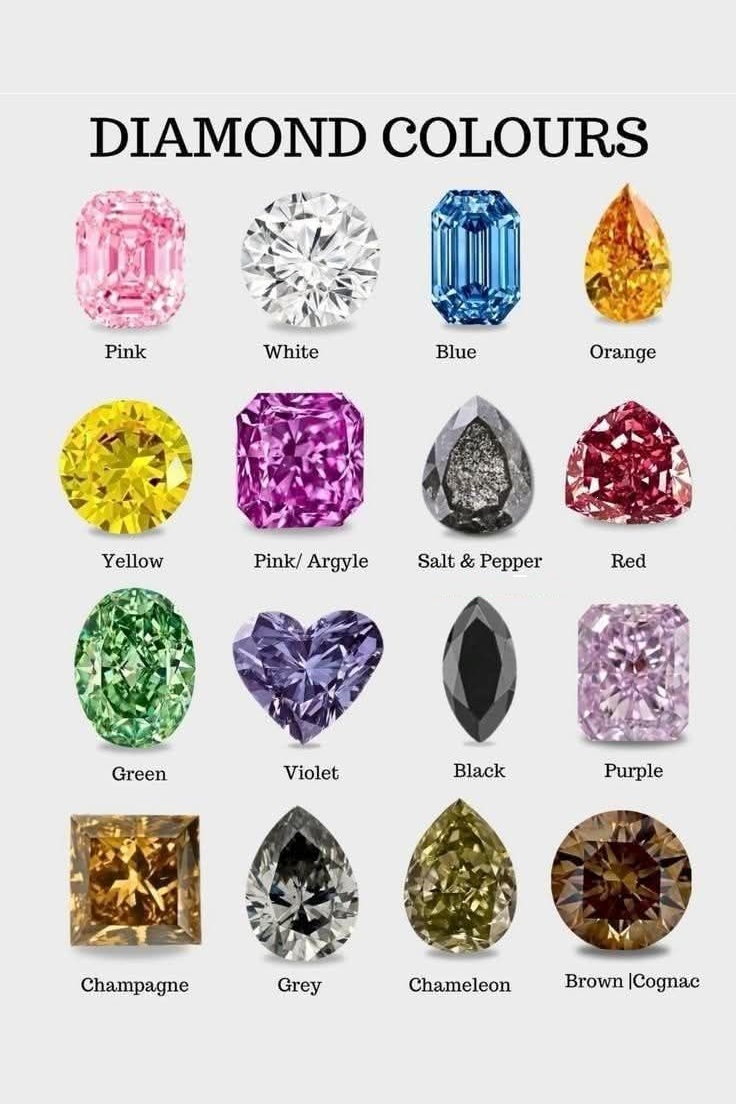
Diamonds aren’t just white! From vivid pinks to deep blacks, natural diamonds occur in a stunning variety of unique hues known as fancy color diamonds.
Whether you are a jewelry designer, collector, or looking for a unique engagement ring, this complete diamond color chart guides you through all major natural diamond hues, their rarity, and how they are classified.
The Natural Diamond Color Spectrum
Natural diamonds are divided into two main categories: The D-to-Z Scale (for white diamonds) and The Fancy Color Scale (for rare, deeply saturated hues).
[D] --------------------> [Z] | [Fancy Faint] ------------> [Fancy Vivid/Deep]
   (Absence of Color)                   (Presence of Deep, Rare Hues)
1. The White Diamond Scale (GIA D-to-Z)
This scale measures how close a white diamond comes to being completely colorless.
- Colorless (D–F): The highest tier. These stones are completely icy white and carry a massive rarity premium.
- Near-Colorless (G–J): The industry sweet spot. They appear face-up as white to the untrained eye but offer massive budget savings.
- Faint to Light Tint (K–Z): These possess noticeable warm yellow, brown, or gray undertones. They are budget-friendly and pair beautifully with warm yellow or rose gold settings.
2. The Fancy Color Diamond Chart
Once a diamond’s color saturation goes beyond the “Z” grade, or displays an entirely different color altogether, it is categorized as a Fancy Color Diamond. Refer to the chart below to visualize these premium shapes and hues.
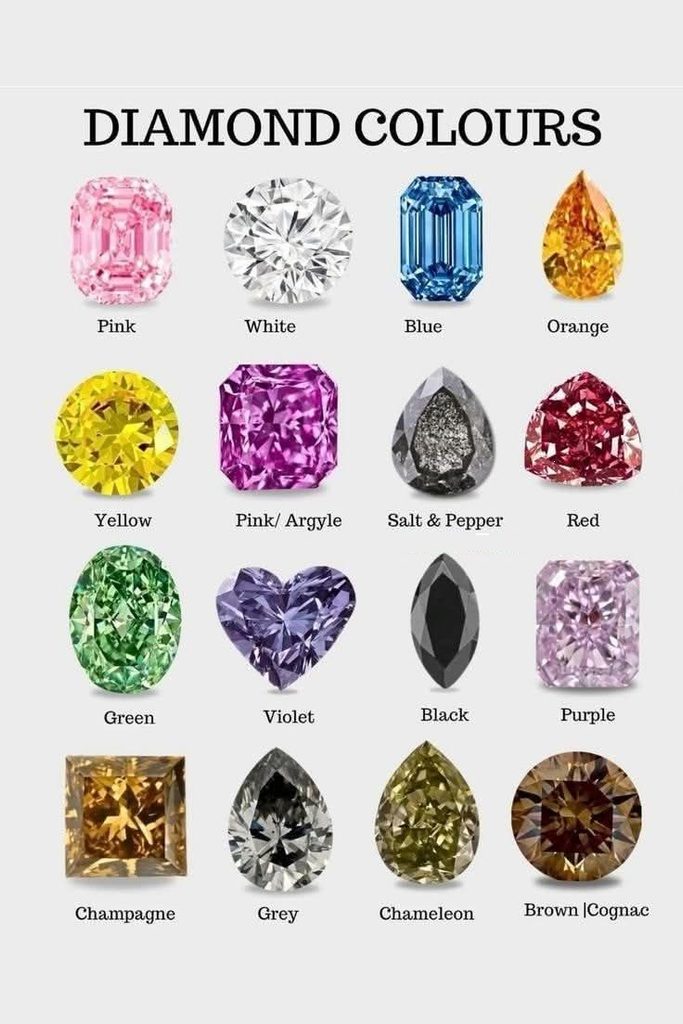
Fancy Color Diamond Classifications
| Diamond Hue | Rarity Level | Primary Cause of Color |
|---|---|---|
| Pink & Purple | Extremely Rare | Natural crystal lattice distortion from intense underground pressure. |
| Blue & Violet | Extremely Rare | Trace amounts of the element Boron trapped during formation. |
| Green | Very Rare | Exposure to natural underground radiation over millions of years. |
| Yellow & Orange | Rare | High concentrations of Nitrogen mimicking light waves. |
| Black & Brown | Common / Unique | High volume of dark inclusions (Black) or structural anomalies (Champagne/Chocolate). |
| Red | The Absolute Rarest | Severe, ultra-rare atomic lattice distortion; only a few pure reds exist globally. |
💎 Smart Value Tips for Diamond Shopping
Shape and Cut Selection
Shape Matters: Round Brilliant cuts reflect so much light that they easily hide body color tints. Conversely, step-cuts like Emerald and Asscher shapes have flat, open tables that act like windows, making natural color tints highly visible to the eye.
Precious Metal Settings
Pick the Right Metal: Setting an icy, near-colorless diamond (G-J) into White Gold or Platinum brilliantly highlights its clarity. On the other hand, setting a warm-toned K-M diamond in Yellow Gold completely masks its underlying yellow tint, effectively making the stone look whiter face-up.






&url=https://caratvogue.com/product/luxora-21k-gold-designer-mala-set-one-tola/&media=https://caratvogue.com/wp-content/uploads/2024/10/Luxora-21K-Gold-Designer-Mala-Set-One-Tola-850x1024.jpeg)